What to consider when choosing a wearable for durability
Short answer When choosing a wearable breast pump for durability, focus on the materials in the milk path, the quality of the motor and seals, battery life, and how easy the pump is to clean and dry. Look for BPA-free, food-grade parts, a simple charging method, and a design with few crevices where milk can hide. A pump that is comfortable to use daily and simple to maintain will naturally last longer.
Choosing a wearable breast pump is a personal decision, and durability is often the quiet factor that makes the biggest difference over time. A pump that feels sturdy, cleans easily and keeps working reliably through months of daily use is worth more than one with extra features that wear out quickly. This guide walks through what to consider when choosing a wearable for durability, step by step, so you can compare options with confidence rather than guesswork.

Why durability matters in a wearable pump
A wearable pump lives a busy life. It gets slipped into your bra several times a day, carried in a nappy bag, charged on the go and washed after every session. Unlike a traditional electric pump that sits on a table, a wearable is handled constantly, which means it needs to be built to withstand daily wear and tear.
Durability is not just about the outer shell. It is about the small things that keep a pump working well: the seals that hold the milk in, the battery that holds its charge, the buttons that respond every time, and the materials that do not degrade after repeated washing. A pump that is easy to care for will naturally last longer, because it is more likely to be cleaned properly and stored correctly.
For many mums in Ireland, a wearable pump is a significant purchase. Taking the time to check the build quality before you buy can save you frustration later. The good news is that durability is something you can assess before you commit, by looking at a few key areas.
| Feature | Details |
|---|---|
| Type | Wearable, in-bra, hands-free double electric breast pump (sold as a set of two cups) |
| Modes | 4 — Stimulation, Suction, Massage, Automatic |
| Levels | Up to 12 adjustable levels with intelligent suction & frequency adjustment |
| Controls | On-device LED display + touch buttons (mode, +, −, power), no app, no Bluetooth |
| Materials | BPA-free, food-grade PP and soft medical silicone in the milk path |
| Charging | USB-rechargeable with a simple round charging base |
What to look for when choosing a durable wearable pump
When you are comparing wearable pumps, there are six main areas to consider. Working through them one by one will give you a clear picture of how well a pump is likely to hold up over time.
1. Materials in the milk path
The parts that touch your milk are the ones that get washed most often. Look for pumps that use BPA-free, food-grade materials and soft medical silicone in the milk path. These materials are designed to withstand repeated washing and sterilising without breaking down or absorbing odours. A clear collector cup is also a practical feature, because it lets you see the milk as it flows and makes it easier to spot any residue that needs extra cleaning.
2. Quality of the seals and fit
A wearable pump relies on a snug fit inside your bra to stay in place and prevent spills. Check that the cup sits upright and that the seals around the collector are firm. A pump with a tidy, spill-resistant design is less likely to leak, which protects both your clothes and the pump's internal components. If the seals feel flimsy or the cup does not sit securely, that is a sign the pump may not hold up well to daily use.
3. Battery life and charging
The battery is one of the most important parts of a wearable pump, because it determines how long you can use the pump away from a power source. Look for a pump that is USB-rechargeable, as this makes topping up simple from a laptop, power bank or phone charger. A simple charging base is also a good sign, because it means fewer cables and connectors to lose or damage. A pump that charges easily is more likely to be kept topped up, which keeps it ready when you need it.
4. Ease of cleaning and drying
Fewer parts means less faff at the sink, and it also means fewer places for milk to hide. A pump with simple components that are easy to hand-wash and dry thoroughly will stay in better condition over time. Milk residue left in crevices can lead to odours and can affect how well the pump works. Look for a design with a clear collector and minimal nooks and crannies. For the best routine, follow the current guidance from the HSE on breastfeeding and see our step-by-step cleaning guide.
5. Controls and display
A pump with simple, on-device controls is less likely to suffer from connectivity issues or software problems. Look for a pump with an LED display and touch buttons that are easy to read and respond reliably. Pumps that require an app or Bluetooth pairing add another layer of complexity that can fail over time. A pump that keeps everything on the device itself is often more dependable in the long run.
6. Noise level and motor quality
A quiet motor is not just a comfort feature, it is also a sign of a well-made pump. A motor that is tuned to run softly is likely to be engineered with care, and it will be more pleasant to use in shared spaces or beside a sleeping baby. An ultra-quiet motor makes pumping discreet, which means you are more likely to use the pump regularly, and regular use with proper care keeps it working well.
A step-by-step checklist for assessing durability
To make the process simple, here is a practical checklist you can work through when comparing wearable pumps. It covers the key areas that affect how long a pump will last.
- Check the materials: look for BPA-free, food-grade PP and soft medical silicone in the milk path.
- Inspect the seals: make sure the cup sits upright and the collector seals are firm and secure.
- Review the battery: choose a USB-rechargeable pump with a simple charging base.
- Count the parts: fewer parts means easier cleaning and fewer places for milk to hide.
- Test the controls: make sure the buttons respond clearly and the LED display is easy to read.
- Listen to the motor: a quiet motor is a good sign of quality engineering.
- Consider the warranty: a longer warranty gives you peace of mind and reflects the manufacturer's confidence in the product.
Working through this checklist will help you compare pumps on the factors that genuinely matter for durability. It also helps you avoid being swayed by features that look impressive but do not contribute to how long the pump will last.
Summary table: durability checks at a glance
| Check | What to look for | Why it matters |
|---|---|---|
| Materials | BPA-free, food-grade PP and soft medical silicone | Withstands repeated washing without degrading |
| Seals and fit | Firm seals, upright cup, spill-resistant design | Prevents leaks that can damage the pump |
| Battery | USB-rechargeable with a simple charging base | Easy to top up, keeps the pump ready for use |
| Cleaning | Few parts, clear collector, no hidden crevices | Thorough drying prevents odours and wear |
| Controls | On-device LED display and touch buttons | Fewer connectivity issues over time |
| Motor | Ultra-quiet operation | Sign of careful engineering and discreet use |
Common mistakes to avoid when choosing a wearable pump
Even with the best intentions, it is easy to overlook durability when you are focused on comfort and convenience. Here are the common mistakes mums make, and how to avoid them.
- Choosing style over substance: A sleek design is lovely, but it is the materials and seals that determine how long the pump lasts. Check the build quality before you fall for the look.
- Ignoring the cleaning routine: A pump that is hard to clean will not get cleaned properly, and that shortens its life. Choose a pump with few parts and simple maintenance.
- Forgetting about the battery: A pump with a complicated charging method is more likely to be left flat. A simple USB-rechargeable design keeps the pump ready when you need it.
- Overlooking the warranty: A good warranty is a sign that the manufacturer stands behind the product. It also gives you protection if something goes wrong.
- Assuming all wearables are the same: Wearable pumps vary widely in quality. Take the time to compare materials, seals and controls rather than assuming they are all built to the same standard.
Avoiding these mistakes is straightforward when you have a clear checklist to work through. Take your time, compare the options, and trust your instincts about what feels sturdy and well made.
How the Relievoo M22 PRO2 is built for daily use
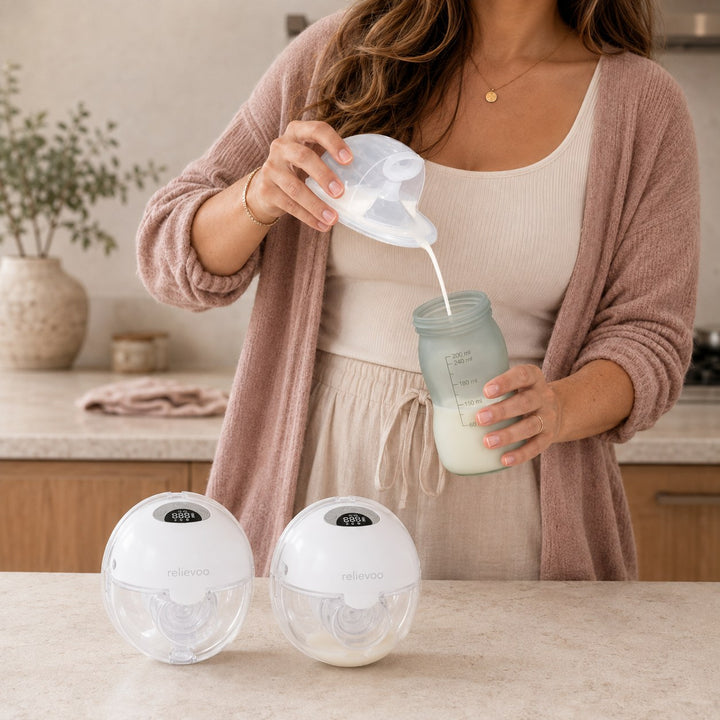
The Relievoo M22 PRO2 is a hands-free, in-bra double pump designed with comfort and practicality in mind. It sits discreetly inside your nursing bra with no tubes, no wires to the wall and no app to download. Each palm-sized clear cup has an LED display showing your mode, level and battery, so everything you need is on the device itself.
Every part that touches your milk is BPA-free, food-grade PP and soft medical silicone, chosen to withstand repeated washing. The clear collector cup lets you see your milk as it flows, and the white motor dome keeps the controls neatly on top. Charging is simple via a round USB base, which makes topping up as easy as setting the pump down.
The pump offers four modes: Stimulation for a light, quick rhythm at the start of a session, Suction for a deeper, slower rhythm that mimics your baby's natural suckling, Massage to help relieve engorgement and everyday discomfort, and Automatic, which flows between stimulation and suction for you. Across those modes there are up to twelve gentle levels, so you can shape every session to feel right. The motor is ultra-quiet, making it suitable for expressing beside a sleeping baby at night or on a work call.
If you are comparing options, you can browse all the breast pumps in the Relievoo collection to see what else is available. For protecting your pump when you are on the go, a protective carrying case with a hard shell and custom-molded interior can keep it safe and organised in your nappy bag.

How to make your wearable pump last longer
Once you have chosen a well-made pump, a little care goes a long way. Here are some gentle habits that help any wearable pump stay in good condition.
- Clean the pump after every use and let all parts dry thoroughly before reassembling.
- Store the pump in a dry, cool place when it is not in use.
- Keep the charging base somewhere you will not lose it, and top up the battery regularly.
- Check the seals from time to time and replace any parts that show signs of wear.
- Follow the cleaning and sterilising guidance from the HSE on breastfeeding to keep the milk path hygienic.
These habits are simple, but they make a real difference. A pump that is cleaned, dried and stored properly will serve you well for much longer than one that is left damp or tossed into a bag.
Support and guidance in Ireland
Wherever you are in Ireland, support is close by. The HSE provides access to lactation support through maternity hospitals and public health nursing. Cuidiú, La Leche League of Ireland and Friends of Breastfeeding all run local groups and offer guidance for mums at every stage.
If you have any concerns about expressing, your public health nurse, midwife or GP is always your best first call. For questions about a specific pump or your order, Relievoo customer service is happy to help.
A calm conclusion
Choosing a durable wearable pump is about looking past the surface and checking the things that matter over time: materials, seals, battery, cleaning and controls. A pump that is comfortable to use daily and simple to maintain will naturally last longer, and that makes the whole experience more enjoyable.
There is no single right answer for every mum. The best pump is the one that fits your daily life, feels comfortable on your body, and is built to keep up with you. Take your time, work through the checklist, and trust your instincts about what feels sturdy and well made.
If you would like to see the Relievoo M22 PRO2 for yourself, you can explore the product page or browse the full breast pump collection. For any questions about the pump or your order, Relievoo customer service is happy to help.
This article is for general information for Irish families and is not medical advice. For personalised feeding support, your public health nurse, GP or a HSE lactation consultant is always your best first call.
Frequently asked questions
How long do wearable breast pumps last?
The lifespan of a wearable pump depends on how often you use it and how well you care for it. A well-maintained pump with quality materials and a rechargeable battery can serve you through your entire breastfeeding journey and beyond. To keep yours working well, follow the cleaning guidance from the HSE and store it in a dry place.
Can you sleep with a wearable breast pump?
It is not recommended to sleep while wearing a breast pump. Pumping while lying flat can lead to spills and may not be comfortable or safe. It is better to pump sitting upright and to follow the HSE guidance on safe positioning. A wearable pump can be used beside your baby's cot at night, but you should stay awake and alert during the session.
Why do wearable pumps decrease supply?
Some mums worry that wearable pumps reduce supply, but the pump itself is not the cause. Supply is usually affected by how often milk is removed and how well the flange fits. If you are concerned about your supply, check your flange size and speak to your public health nurse, midwife or GP for personalised advice.
What should I check for durability in a wearable pump?
Look at the materials in the milk path, the quality of the seals and the battery. BPA-free, food-grade parts are a good sign, as is a simple charging method. Fewer parts and fewer crevices make cleaning easier, which helps the pump stay in good condition over time.
Is a wearable breast pump better than an electric pump?
Wearable pumps are a type of electric pump, so the comparison is really about design. Wearable pumps offer hands-free freedom and discretion, while traditional electric pumps with tubing keep you tethered to a wall socket. The best choice depends on your routine and what feels comfortable for you.