Are Wearable Breast Pumps Worth It?
Short answer Wearable breast pumps are worth it for mums who want to express hands-free without being tied to a wall socket. They sit discreetly in your bra, are quiet enough for night feeds and make it easier to pump while caring for your baby or working. The trade-off is a higher price and more parts to clean, so it depends on how often you plan to pump and where.
If you have been searching for "are wearable breast pumps worth it", you are probably trying to decide whether a hands-free pump deserves a place in your nursing routine. This guide is for mums in Ireland who are weighing up the convenience of a wearable pump against the cost, and who want an honest look at what these devices can and cannot do. We will walk through comfort, noise, fit, cleaning and portability so you can make up your own mind.

What is a wearable breast pump, and how does it work?
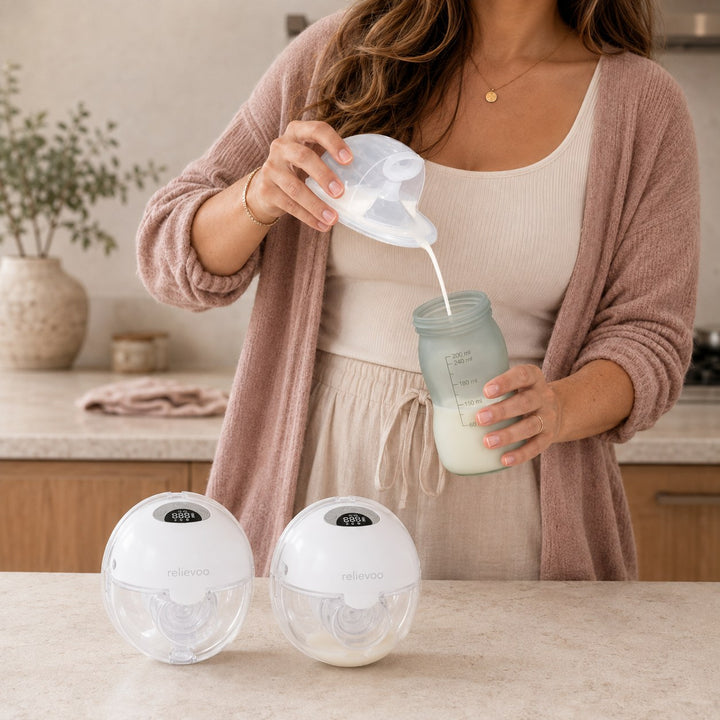
A wearable breast pump is a small, battery-powered device that sits inside your nursing bra. Unlike a traditional electric pump, there are no tubes connecting you to a wall socket and no dangling bottles. The milk collects in a cup that sits against your chest, and the whole thing is discreet enough to wear under a normal top.
Most wearable pumps work in the same basic way. A soft flange sits over your nipple, and gentle suction draws milk into the collector. You control the suction level and the mode with buttons on the device itself. Some models, like the Relievoo M22 PRO2, offer a choice of modes, including a stimulation mode to encourage your let-down and a suction mode that mimics your baby's natural suckling rhythm.
Can you breast pump lying down?
Wearable pumps are designed to be worn upright in your bra, so they are not really suited to lying flat. Pumping while lying down could cause milk to spill or collect improperly. If you want to pump in bed, sitting up or reclining slightly is a safer option.
| Feature | Details |
|---|---|
| Type | Wearable, in-bra, hands-free double electric breast pump (sold as a set of two cups) |
| Modes | 4 — Stimulation, Suction, Massage, Automatic |
| Levels | Up to 12 adjustable levels with intelligent suction & frequency adjustment |
| Controls | On-device LED display + touch buttons (mode, +, −, power), no app, no Bluetooth |
| Materials | BPA-free, food-grade PP and soft medical silicone in the milk path |
Comfort: the most important factor
Comfort is the single biggest reason mums either love or abandon a wearable pump. A pump that pinches, pulls or feels heavy in your bra will quickly end up in the back of a cupboard. The flange needs to fit your nipple properly, and the suction should feel gentle rather than aggressive.
Look for a pump with soft, flexible silicone in the parts that touch your skin, and check whether the suction levels are adjustable. The Relievoo M22 PRO2, for example, has a dedicated massage mode that gently works to ease engorgement and tenderness, which can be a real help in the early weeks. It also offers four modes across twelve soft levels, so you can find a setting that feels right for you.
If you are unsure about flange sizing, the HSE has practical information on breastfeeding and expressing, and it is always worth asking your public health nurse for guidance. A well-fitted flange makes a world of difference to how comfortable a session feels.
Noise: can you really pump discreetly?
One of the biggest selling points of a wearable pump is that it is quiet. Traditional electric pumps can sound like a small machine running, which is fine in private but awkward on a video call or beside a sleeping baby. Wearable pumps are designed to be much softer, though the actual noise level varies from model to model.
The M22 PRO2 is described as having a low-noise motor that is soft enough to wear on a work call or beside your baby's cot at 2am. That matters if you plan to express through the night without waking your baby. If noise is a priority for you, it is worth checking the specifications of any pump you are considering and reading reviews from other mums.
Fit and how it is worn
A wearable pump only works well if it stays in place. The cups need to sit securely inside your bra without slipping, and the collector should hold enough milk for a full session. Most wearable pumps are palm-sized and fit inside a nursing bra or a supportive regular bra.
It is worth thinking about your bra size and shape before you buy. Some mums find that certain pumps sit better than others depending on their chest size. The M22 PRO2 is worn upright in-bra for a tidy, spill-resistant fit, and the clear collector lets you see your milk as it flows. If you are between sizes, it may help to try a pump with a few different flange options or to ask your public health nurse for advice.
Cleaning and hygiene
Cleaning is the part of pumping that nobody enjoys, and wearable pumps are no exception. Because the milk path is contained within the cup, you will need to wash and sterilise the parts after every use. Some pumps have fewer parts than others, which makes the job quicker.
Look for a pump with a simple design and parts that are easy to take apart and rinse. The M22 PRO2 uses BPA-free, food-grade PP and soft medical silicone in the milk path, which is reassuring. For the best way to keep your pump clean, the HSE has guidance on sterilising feeding equipment, and you can also read our step-by-step guide on the best way to clean a breast pump.
Portability and battery life
The whole point of a wearable pump is that you can move around while you express. That means battery life matters. You do not want the pump to run out halfway through a session, especially if you are at work or out and about. Most wearable pumps are USB-rechargeable, and the M22 PRO2 has a simple round charging base that you can top up easily.
Think about where you will actually pump. If you are returning to work, a wearable pump can be a game-changer because you can express at your desk or in a meeting without disappearing for a while. Our guide to pumping at work in Ireland covers this in more detail. If you are mostly at home, a traditional pump might be perfectly adequate, and a wearable one becomes a luxury rather than a necessity.

An honest checklist for choosing a wearable pump
Before you spend your money, work through this checklist. It will help you compare the options and decide what matters most to you.
- Does the flange fit your nipple properly? A poor fit causes pain and reduces output.
- Are the suction levels adjustable? You need to be able to find a gentle, comfortable setting.
- Is there a massage or stimulation mode? This can help with let-down and engorgement.
- How loud is the motor? If you plan to pump at night or in public, quiet matters.
- How many parts are there to clean? Fewer parts means less hassle after each session.
- Does the cup hold enough milk for your typical session? Check the capacity.
- How long does the battery last? Make sure it will cover your longest day.
- Is it comfortable to wear in your bra? A pump that slips or digs in will not get used.
- What is the warranty and return policy? You want peace of mind if it is not right for you.
Comparison table: what to look for in a wearable pump
| Criterion | Why it matters | What to check |
|---|---|---|
| Comfort | A painful pump will not get used, no matter how convenient it is. | Soft silicone parts, adjustable suction, a massage mode for tenderness. |
| Fit | The pump must sit securely in your bra without slipping or leaking. | Flange sizing options, upright in-bra design, spill-resistant collector. |
| Noise | A quiet motor lets you pump discreetly at work or beside your baby. | Noise level in decibels, or reviews from mums about how quiet it is. |
| Cleaning | You will wash the pump after every use, so fewer parts is better. | How easy it is to take apart, and whether parts are dishwasher-safe. |
| Portability | The pump should be light enough to carry and charge easily. | Weight, size, USB charging and battery life for a full day out. |
| Support | You may need help with sizing or troubleshooting. | Warranty, return policy and whether customer service is easy to reach. |
Who a wearable pump suits best
A wearable pump is a great fit for mums who need to express while caring for a busy baby, who are returning to work and want to pump at a desk, or who simply hate being tied to a wall socket. It is also a good choice for night pumping, because the quiet motor is less likely to wake a sleeping baby.
On the other hand, if you only pump occasionally and are happy to sit still for a while, a traditional electric pump may be all you need. Wearable pumps cost more, and the extra convenience is only worth it if you will actually use it. If you are still unsure, it may help to read our comparison of double versus single breast pumps and our guide to the best wearable breast pump.
If you decide a wearable pump is for you, the Relievoo breast pump collection has options to suit different needs and budgets. The M22 PRO2 is a comfort-led choice with a massage mode and a quiet motor, while the S32 PRO2 remains a solid everyday pump. Whichever you choose, take your time to get the fit right and follow the cleaning guidance from the HSE.
A calm final thought
There is no single right answer to whether a wearable breast pump is worth it. It depends on your routine, your body and your budget. If you value the freedom to move around while you express, and you are happy to pay a little more for that convenience, a wearable pump can make a real difference to your day. If you are unsure, talk to your public health nurse or a lactation consultant through Cuidiú or La Leche League of Ireland. They can help you think through what will work best for you and your baby.
And remember, if you have any questions about a Relievoo pump, the customer service team is there to help. The most important thing is that you find a way of feeding your baby that feels right for you.
Frequently asked questions
Which wearable breast pump is best?
The best wearable pump is the one that fits your body and your routine. Look for a pump with adjustable suction levels, a comfortable flange fit and a quiet motor. It is also worth checking how easy it is to clean and whether it offers a massage mode if you tend to feel engorged.
Is a wearable breast pump worth it?
For many mums, yes. A wearable pump lets you express hands-free while caring for your baby, working or moving around the house. It is quieter and more discreet than a traditional pump, though it usually costs more and has more parts to wash. Think about how often you will use it before you decide.
How long is a typical breast pump session?
Most pumping sessions last around 15 to 20 minutes per side, but this can vary from mum to mum. The right length depends on your milk flow and your baby's feeding pattern. It is best to follow your own body's cues and the current advice from the HSE on breastfeeding and expressing.
Can you breast pump laying down?
Wearable pumps are designed to be worn upright in your bra, so they are not really suited to lying flat. Pumping while lying down could cause milk to spill or collect improperly. If you want to pump in bed, sitting up or reclining slightly is a safer option.
How long does breast pump milk last?
Storage times for expressed breast milk depend on the temperature and how it is stored. The HSE provides clear guidance on how long breast milk can be kept at room temperature, in the fridge or in the freezer. Always follow the current official advice to keep your milk safe for your baby.