Mommed S21 Alternative UK: Finding the Right Pump for You
Short answer If you are looking for a Mommed S21 alternative in the UK, the main options are wearable in-bra pumps, traditional electric pumps with tubing, and manual pumps. Each suits a different routine, so the right choice depends on how often you pump, where you pump and your budget.
If you have been searching for a Mommed S21 alternative UK, you are probably weighing up the different types of breast pumps available and wondering which one fits your daily life. This article is for mums who want a clear, honest comparison of the main options: wearable in-bra pumps, traditional electric pumps with tubing, and manual pumps. We will look at how each type works, who it suits best, and what to consider before you buy, so you can make a confident choice for you and your baby.

Why look for a Mommed S21 alternative in the UK?
The Mommed S21 is a wearable breast pump that many mums consider because it is hands-free and discreet. However, it is not the only option, and it may not be the right fit for everyone. Some mums find that a different style of pump suits their routine better, whether that is because of comfort, the way they plan to use it, or simply the features on offer.
When you compare alternatives, it helps to think about the three main types of pumps. Each has its own strengths, and the best one for you depends on how often you pump, where you pump, and how much portability matters to you. The NHS has general guidance on breastfeeding and bottle feeding that can help you think through your options.
| Feature | Details |
|---|---|
| Type | Wearable, in-bra, hands-free double electric breast pump (sold as a set of two cups) |
| Modes | 4 — Stimulation, Suction, Massage, Automatic |
| Levels | Up to 12 adjustable levels with intelligent suction & frequency adjustment |
| Controls | On-device LED display + touch buttons (mode, +, −, power), no app, no Bluetooth |
| Materials | BPA-free, food-grade PP and soft medical silicone in the milk path |
The main types of breast pumps
Before comparing specific models, it is useful to understand the three broad categories. Most pumps on the market, including the Mommed S21 and its alternatives, fall into one of these groups.
Wearable in-bra pumps
Wearable pumps sit inside your nursing bra, so there are no tubes and no wires to a wall. They are designed to be discreet and hands-free, which makes them popular with mums who want to move around, do light tasks, or pump while caring for older children. The collection cup fits inside the bra and the motor sits on top of the cup.
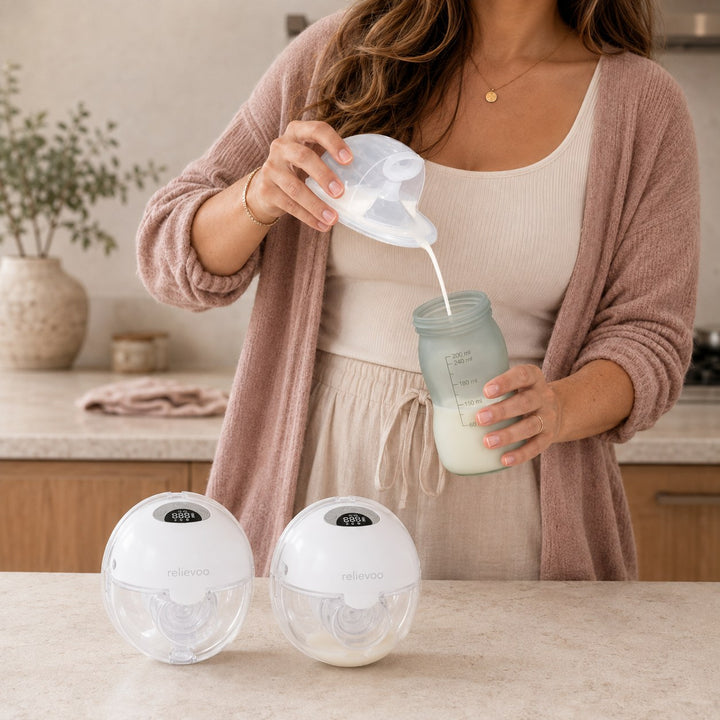
Brands such as Momcozy, Elvie and Willow all make wearable pumps, and each has its own approach to fit, controls and comfort. The Relievoo M22 PRO2 is another wearable option, designed with a massage mode and on-device controls, which we will look at more closely below.
Traditional electric pumps with tubing
Traditional electric pumps use a motor that sits on a table or beside you, connected to the breast shield by a length of tubing. They are a familiar choice for many mums and are often used for regular pumping at home. Because the motor is separate, these pumps can feel sturdy and reliable, and they are widely available from brands such as Medela, Philips Avent and Tommee Tippee.
The main trade-off is that you are tethered to the motor while you pump, so you need to be seated and fairly still. That is fine for a dedicated pumping session, but less convenient if you want to move around.
Manual pumps
Manual pumps are simple, lightweight devices that work by squeezing a handle to create suction. They do not need batteries or electricity, which makes them very portable and quiet. Brands such as Lansinoh and Philips Avent make manual pumps that are popular for occasional use, such as expressing a little milk to relieve fullness or when you are travelling.
The downside is that they use your hand and arm to work, so they can be tiring for longer sessions. They are best suited to mums who only need to express occasionally.
Introducing the Relievoo M22 PRO2
One alternative worth considering is the Relievoo M22 PRO2, a wearable in-bra double pump that focuses on comfort. It offers four modes: Stimulation, Suction, Massage and Automatic, across up to twelve gentle levels. The massage mode is designed to help with engorgement and tenderness, which is a thoughtful feature for mums who experience discomfort.
The pump has a one-touch LED display on each cup that shows the mode, level and battery, and there is no app to download or phone to pair. Everything is controlled on the device itself. The milk path is made from BPA-free, food-grade PP and soft medical silicone, and the clear collector cup lets you see your milk as it flows. It is USB-rechargeable with a round charging base.
Comparison table: Mommed S21 alternative options
To help you compare the main types at a glance, here is a table that looks at the key criteria. The Relievoo column uses the product facts for the M22 PRO2, while the other columns describe the type of pump in general terms.
| Criterion | Wearable in-bra (Relievoo M22 PRO2) | Wearable in-bra (other brands) | Traditional electric with tubing | Manual |
|---|---|---|---|---|
| Hands-free | Yes, sits inside the bra | Yes, sits inside the bra | No, you are connected by tubing | No, you hold it and squeeze |
| Portability | High, no tubes or wires | High, no tubes or wires | Low, needs a flat surface | Very high, small and light |
| Modes and levels | 4 modes, up to 12 levels | Varies by brand and model | Varies by brand and model | Usually one suction setting |
| Comfort features | Dedicated massage mode | Varies by brand and model | Varies by brand and model | Limited |
| Controls | On-device LED display, no app | Varies, some use an app | On the motor unit | Manual handle |
| Noise | Ultra-quiet motor | Varies by brand and model | Varies, some are noisy | Very quiet |
| Best for | Mums who want comfort and discretion | Mums who want hands-free pumping | Regular home pumping sessions | Occasional expressing |
What to consider when choosing a pump
There is no single best pump for everyone, so it helps to think about your own circumstances before you decide. Here are some questions to ask yourself.
How often will you pump?
If you plan to pump several times a day, a comfortable electric pump is worth investing in. A wearable pump like the M22 PRO2 can make frequent sessions easier because you are not tied to a wall. If you only need to express occasionally, a manual pump may be enough.
Where will you pump?
If you are mostly at home and can sit still for a pumping session, a traditional electric pump works well. If you want to pump at work, while travelling, or while looking after other children, a wearable pump gives you more freedom. The NCT has information on feeding your baby that can help you think through your routine.
What does comfort mean to you?
Comfort is personal. Some mums prefer a pump with a massage mode to ease tenderness, while others just want a simple, reliable suction. The M22 PRO2 includes a massage mode as one of its four settings, which is a nice option if you experience engorgement or lumps. If you are unsure about what feels right, speaking to your midwife or health visitor can be helpful.

Why your breast pump might not be working
If you already have a pump and it does not seem to be working well, there are a few common reasons. The flange (the part that goes over your breast) might not be the right size, which can affect both comfort and output. The suction level might be too high or too low, and the pump might not be assembled correctly, so there is a leak in the seal.
It is also worth checking that the pump is clean and that the parts are not worn. If you are struggling, the Breastfeeding Network offers support and can help you troubleshoot. You can also ask your midwife or health visitor for advice.
Is breast pumping painful?
Pumping should not hurt. If you feel pain, it is usually a sign that something needs adjusting, such as the flange size or the suction level. Many pumps, including the M22 PRO2, let you start on a gentle level and increase gradually. A massage mode can also help if you feel tender.
If pain continues, it is worth speaking to a professional. La Leche League GB has breastfeeding support that can help, and your health visitor can also offer guidance.
Verdict: who should choose which option?
Here is a clear summary of who each type of pump suits best.
- Choose a wearable in-bra pump like the Relievoo M22 PRO2 if: you want hands-free pumping, value discretion, and would like a massage mode for extra comfort. It is a good fit for busy mums who pump on the go.
- Choose another wearable pump (such as Momcozy, Elvie or Willow) if: you want a hands-free design and prefer the specific features or style of another brand. Compare the controls, modes and comfort to find what suits you.
- Choose a traditional electric pump with tubing (such as Medela, Philips Avent or Tommee Tippee) if: you mostly pump at home and want a familiar, sturdy option for regular sessions. You will need to sit still while pumping.
- Choose a manual pump (such as Lansinoh or Philips Avent) if: you only express occasionally, want something very portable, and do not mind using your hand to pump.
Final thoughts
Finding the right Mommed S21 alternative in the UK is about matching the pump to your life, not chasing a particular brand. Think about how often you will pump, where you will be, and what comfort means to you. The Relievoo M22 PRO2 is one comfortable, discreet option, and you can browse the full breast pump collection to see what else is available. Take your time, and if you have questions about a specific product, Relievoo customer service will be happy to help.
Frequently asked questions
Which is better, the Mommed S21 or the Momcozy?
Both are wearable in-bra pumps, but they suit different needs. The Mommed S21 is a hands-free option, while Momcozy also makes a range of wearable pumps. The best choice depends on your comfort, your routine and which features matter most to you, such as massage modes or on-device controls.
How long does a breast pump session take?
A typical pumping session lasts as long as it takes for your milk to flow and for your breasts to feel comfortably drained. This varies from mum to mum and can change over time. Follow your own body and the current guidance from the NHS or a breastfeeding specialist.
How does a breast pump work?
A breast pump uses gentle suction to draw milk from the breast, mimicking a baby's natural suckling rhythm. Many electric pumps start with a stimulation phase to encourage let-down, then switch to a deeper suction phase for expression. Wearable pumps sit inside your bra, while traditional pumps use tubing connected to a motor.
What breast pump should I get?
Think about how often you plan to pump and where. A wearable in-bra pump is convenient for busy days and for pumping on the go. A traditional electric pump with tubing is a familiar choice for regular home use. A manual pump is simple and portable for occasional use. Your midwife or health visitor can also offer guidance.
Is breast pumping painful?
Pumping should not be painful. If you feel discomfort, it may be that the flange size is not right or the suction level is too high. Most pumps allow you to adjust the level, and some have a massage mode for extra comfort. If pain continues, speak to your midwife, health visitor or a breastfeeding specialist.