Returning to Work Breastfeeding NZ: A Practical Guide
Short answer Returning to work while breastfeeding in New Zealand takes planning around your rights, your baby's needs and your own comfort. Start by talking to your employer about a private space and break times, then build a small milk stash and practise pumping at the same times you will at work. A comfortable, hands-free pump can make the transition smoother.
Returning to work breastfeeding in NZ is a big transition, and it is completely normal to feel a mix of emotions about it. This guide is for Kiwi mums who want to keep breastfeeding after maternity leave, whether you are heading back full-time, part-time or on a casual basis. With a little planning and some honest conversations, you can make the change feel manageable for both you and your baby.

Start with a Plan, Not Panic
The key to returning to work breastfeeding in NZ is to start early. Give yourself a few weeks before your first day back to sort out the practical details. This is not about being perfect. It is about giving yourself time to adjust, so you are not scrambling at the last minute.
Talk to Your Employer
Under New Zealand law, you have the right to breastfeed or express milk at work. This means your employer needs to provide a suitable place and reasonable breaks for you to do so. The space should be private, clean and not a toilet. Start the conversation early, even before you return, so your employer has time to prepare.
You might like to discuss a few practical points with your manager:
- Where you can pump. Is there a spare office, a first aid room or a quiet meeting room you can book?
- When you can pump. Work out break times that fit with your usual feeding schedule.
- Where you can store your milk. A fridge is ideal, but a small cooler bag with ice packs also works.
For more detail on your rights, have a look at the information from Health New Zealand Te Whatu Ora or talk to your HR team.
| Feature | Details |
|---|---|
| Type | Wearable, in-bra, hands-free double electric breast pump (sold as a set of two cups) |
| Modes | 4 — Stimulation, Suction, Massage, Automatic |
| Levels | Up to 12 adjustable levels with intelligent suction & frequency adjustment |
| Controls | On-device LED display + touch buttons, no app, no Bluetooth |
| Materials | BPA-free, food-grade PP and soft medical silicone in the milk path |
Build a Small Milk Stash
You do not need a freezer full of milk to go back to work. A small stash of around a day or two's worth is enough to get you started. This gives you a buffer while you find your rhythm with pumping at work.
Start expressing once a day, perhaps in the morning when milk supply is often higher. Even a small amount each day adds up. Store the milk in clean containers and label them with the date. For the most current advice on how long breast milk lasts in the fridge or freezer, check the guidance from Plunket.
Practise Pumping at the Same Times You Will at Work
In the weeks before you return, try pumping at the times you will at work. This helps your body get used to the new rhythm. It also gives you a chance to figure out what works, like which pump feels comfortable and how long a session takes. Practising at home means you can troubleshoot any issues without the pressure of a workday.
Choose a Pump That Fits Your Workday
The right pump can make a big difference to how easy pumping at work feels. Think about your day. Will you have a dedicated space to sit, or will you need to move around? Do you mind the noise, or do you need something discreet?
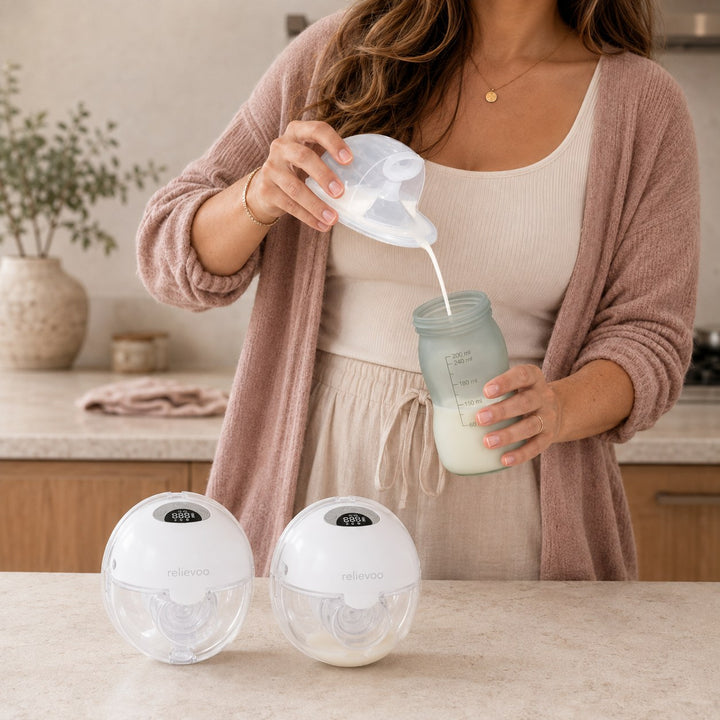
A wearable, hands-free pump like the Relievoo M22 PRO2 sits inside your bra, so there are no tubes or wires to the wall. It is quiet enough to wear on a work call, and the controls are on the device itself, so there is no app to fiddle with. For many mums, this kind of flexibility makes pumping at a desk or in a shared space feel far less stressful.
If you are still deciding, take a look at the full range of breast pumps to compare what is available. The best pump is the one that fits your body, your routine and your comfort.
Set Up Your Pumping Space at Work
A little preparation goes a long way. Before your first day back, pack a bag with everything you need, so you are not hunting around later.
What to Pack in Your Pumping Bag
- Your breast pump and spare parts, including flanges and valves.
- Storage bottles or bags for the expressed milk.
- A small cooler bag with ice packs to carry your milk home.
- Breast wipes or a clean cloth for quick clean-ups.
- A spare shirt, just in case of leaks.
- Hand sanitiser or soap for washing your hands before you pump.
Once you are at work, make the space your own. A comfortable chair, a bottle of water and your phone or a book can help you relax. The more relaxed you are, the easier let-down tends to be.
Follow a Simple Pumping Routine
A predictable routine helps your body know when to expect a pumping session. Here is a step-by-step approach that works for many mums.
- Wash your hands and make sure your pump parts are clean before you start.
- Find your quiet spot. Put up a sign on the door if you need to, and get comfortable.
- Start with stimulation mode. This gentle rhythm helps encourage your let-down.
- Switch to suction mode once your milk starts to flow, and adjust the level to what feels comfortable.
- Pump for as long as feels right. Most sessions last around 15 to 20 minutes, but go with what your body tells you.
- Store your milk straight away. Label it with the date and put it in the fridge or your cooler bag.
- Clean your pump parts after each session so they are ready for next time.
For a full guide on keeping your pump clean, read our article on the best way to clean a breast pump.
| Step | What to Do | Why It Helps |
|---|---|---|
| 1 | Talk to your employer early | Secures a private space and break times |
| 2 | Build a small milk stash | Gives you a buffer for the first days back |
| 3 | Practise pumping at work times | Helps your body adjust to the new rhythm |
| 4 | Choose a pump that fits your day | Makes pumping feel easier and more discreet |
| 5 | Pack a pumping bag | Keeps everything you need in one place |
| 6 | Follow a simple routine | Reduces stress and helps with let-down |

Common Mistakes to Avoid
Every mum's journey is different, but there are a few common pitfalls that are easy to sidestep.
Waiting Until the Last Minute
Leaving your planning until the week before you return adds unnecessary stress. Start talking to your employer and practising with your pump a few weeks ahead. A slow start makes the transition much smoother.
Setting the Suction Too High
Pumping should not hurt. If it does, the suction is probably too high or the flange does not fit properly. Start on a low level and gradually increase until you feel a gentle tug, not pain. If you are unsure about flange sizing, have a look at our flange size guide for a step-by-step explanation.
Skipping the Practice Sessions
Your body needs time to respond to a pump, which is different from a baby. Practising at home, at the same times you will at work, helps your let-down reflex become more reliable. It also lets you figure out the pump controls before you are in a busy office.
Forgetting to Look After Yourself
Returning to work is tiring. Drink plenty of water, eat well and be kind to yourself. If you feel overwhelmed, talk to your partner, a friend or your midwife. You are doing a big job, and it is okay to ask for help.
Common Questions About Pumping for Work
Should breast pumping hurt?
No, it should not. A little sensation is normal, but pain is a sign that something needs adjusting. Check your flange size and lower the suction level. If discomfort continues, talk to your LMC midwife, Plunket nurse or a lactation consultant. Organisations like La Leche League New Zealand can also offer support and advice.
How long does breast milk last after pumping?
Storage times depend on whether the milk is at room temperature, in the fridge or in the freezer. For the most reliable, up-to-date guidance, check the advice from Health New Zealand Te Whatu Ora or Plunket. Always label your milk with the date you expressed it.
Can you pump while lying down?
Yes, many wearable pumps can be used while lying down because they sit inside your bra with no tubes or cords. This can be handy for a middle-of-the-night session or if you want to rest while you pump. Just make sure the cups are positioned well to avoid spills.
Make the Transition Gentler
Returning to work breastfeeding in NZ does not have to be an all-or-nothing situation. Many mums find a rhythm that works for them, whether that is pumping twice a day, once a day or only on certain days. The goal is not perfection. It is finding a way to keep breastfeeding that feels sustainable for you and your baby.
A comfortable, discreet pump can make a real difference to how easy this feels. The Relievoo M22 PRO2 is designed for hands-free, quiet pumping, so you can express without drawing attention or being tied to a wall. It is one helpful option, not the answer to everything, but for many working mums it takes some of the hassle out of the day.
A Calm Final Word
Going back to work is a big change, and it is natural to feel a little unsure. Take it one day at a time. You have already done the hardest part, and you will find your way through this transition too. Be patient with yourself, lean on the people around you, and remember that any amount of breastfeeding you manage is something to be proud of.
If you have questions about a specific product, the Relievoo customer service team is happy to help. And for general breastfeeding support, your LMC midwife, Plunket nurse and GP are all good people to talk to.
Frequently asked questions
How does a breast pump work?
A breast pump uses gentle suction to draw milk from the breast, mimicking a baby's suckling rhythm. Most pumps have a stimulation mode to encourage let-down and a suction mode for expressing. Wearable pumps sit inside your bra, so you can express hands-free without being connected to a wall.
Which breast pump should I get for work?
Think about where you will pump and how much space you have. A wearable, hands-free pump is discreet and lets you move around, which suits many working mums. A plug-in pump can be a good option if you have a dedicated space. Consider comfort, noise level and how easy the pump is to clean.
How long does breast milk last after pumping?
Storage times depend on temperature, so it is best to follow the current advice from a trusted source. Health New Zealand Te Whatu Ora and Plunket both provide clear guidance on storing expressed breast milk. Always label your milk with the date and use clean containers.
Should breast pumping hurt?
No, pumping should not hurt. If you feel pain, the suction may be too high or the flange may not fit properly. Check your flange size and start on a lower level. If discomfort continues, talk to your LMC midwife, Plunket nurse or a lactation consultant.
Can you pump while lying down?
Yes, many wearable pumps can be used while lying down because they sit inside your bra and have no tubes or cords. This can be handy for a middle-of-the-night session. Just make sure the cups are positioned well to avoid spills.