Best Breast Pumps for First Time Moms: A Comparison Guide
Short answer The best breast pump for a first time mum depends on how often you plan to express and where. Wearable in-bra pumps offer hands-free convenience and discretion, traditional electric pumps are reliable for regular home use, and manual pumps suit occasional relief. Consider your daily routine and comfort needs.
Choosing your first breast pump is one of those decisions that feels bigger than it should. With so many options, from wearable in-bra pumps to traditional electric models and simple manual ones, it is easy to feel overwhelmed. This guide is written for first time mums in Ireland who want a clear, honest comparison of the main types of breast pumps, so you can decide which one suits your life, your routine and your comfort.

Why the Right Breast Pump Matters for First Time Mums
Your breast pump is a tool you will likely use daily, sometimes several times a day. A pump that is uncomfortable, awkward or difficult to clean can make expressing feel like a chore. On the other hand, a pump that fits well and works with your routine can make the whole experience much easier. The right choice depends on how often you plan to express, where you will do it, and what feels comfortable for your body. The HSE has practical guidance on breastfeeding and expressing that is worth reading as you get started.
| Feature | Details |
|---|---|
| Type | Wearable, in-bra, hands-free double electric breast pump (sold as a set of two cups) |
| Modes | 4 — Stimulation, Suction, Massage, Automatic |
| Levels | Up to 12 adjustable levels with intelligent suction & frequency adjustment |
| Controls | On-device LED display + touch buttons (mode, +, −, power), no app, no Bluetooth |
| Materials | BPA-free, food-grade PP and soft medical silicone in the milk path |
| Power | USB-rechargeable with a simple round charging base |
The Three Main Types of Breast Pumps
Before comparing specific features, it helps to understand the three broad categories of breast pumps. Each type has its own strengths, and none is universally better than another. The best pump for you is the one that fits your daily reality.
Wearable In-Bra Pumps
Wearable pumps sit discreetly inside your nursing bra, with no tubes and no wires to the wall. They are powered by a small motor built into the cup itself, so you can move around, tend to your baby or even work while expressing. Brands like Momcozy, Elvie and Willow are well known for making wearable pumps. These pumps are popular with mums who want freedom and discretion, whether at home, at work or out and about.
Traditional Electric Pumps with Tubing
Traditional electric pumps have a motor unit that sits on a table or counter, connected to the breast shields by tubing. They are the classic style of pump that most people picture when they think of expressing. Brands like Medela, Philips Avent and Lansinoh are known for making this type of pump. These pumps are often a reliable choice for regular sessions at home, and they tend to have a straightforward, familiar design.
Manual Pumps
Manual pumps are operated by hand, with no motor or battery. You create the suction by squeezing a handle or lever. They are small, lightweight and quiet, and they cost less than electric options. Brands like Philips Avent, Tommee Tippee and Lansinoh make manual pumps. A manual pump can be handy for occasional relief or for expressing a little milk now and then, but it can be tiring for regular, full pumping sessions.
Comparing Your Options: A Handy Table
To make the comparison easier, here is a table that sets the three main types side by side. The Relievoo column refers to the Relievoo M22 PRO2, a wearable double pump that is part of the Relievoo breast pump collection.
| Criterion | Wearable In-Bra Pump (e.g. Relievoo M22 PRO2) | Traditional Electric Pump | Manual Pump |
|---|---|---|---|
| Hands-free use | Yes, worn inside your bra with no tubes | No, you are connected to the motor by tubing | No, you need one hand to operate it |
| Discretion | Very discreet, hidden under clothing | Visible motor unit, not discreet for outings | Small and quiet, but requires hand operation |
| Modes and levels | 4 modes (Stimulation, Suction, Massage, Automatic) with up to 12 levels | Typically offers a few modes and adjustable suction levels | Suction controlled by your own hand pressure |
| Portability | Palm-sized cups, USB-rechargeable, easy to carry | Motor unit and tubing need a bag or case | Very small and lightweight |
| Ease of use | One-touch controls on the device, no app needed | Simple controls on the motor unit | Requires some practice to find a rhythm |
| Best suited for | Mums who want to move around while pumping | Regular sessions at home | Occasional relief or travel |
A Closer Look at the Relievoo M22 PRO2
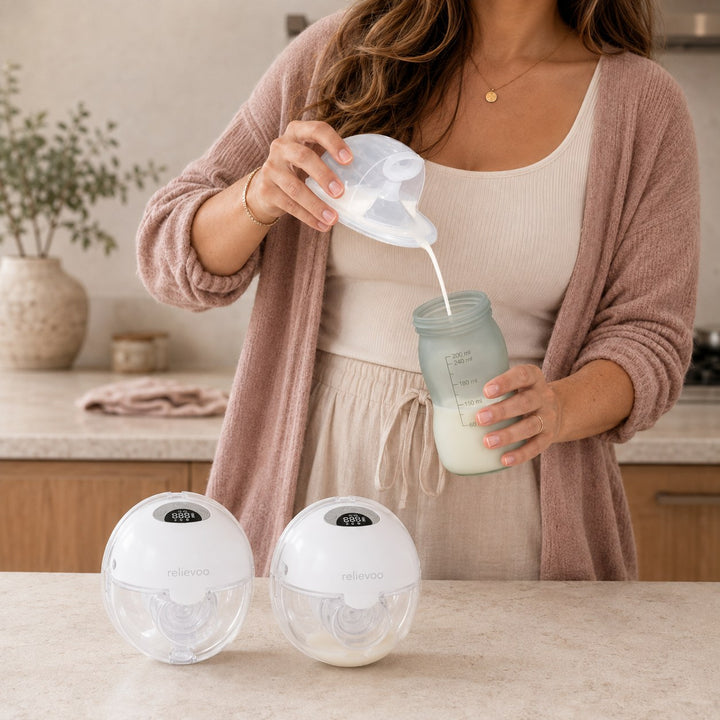
For first time mums who like the idea of a wearable pump, the Relievoo M22 PRO2 is worth considering. It is a hands-free, in-bra double pump designed around comfort. It has four modes: Stimulation to encourage let-down, Suction for a deeper rhythm that mimics a baby's suckling, Massage to ease engorgement and discomfort, and Automatic which flows between stimulation and suction. There are up to twelve gentle levels, and the controls are on the device itself, so there is no app to download or phone to pair.
The pump is quiet enough to wear on a work call or beside your baby's cot at night. Every part that touches your milk is BPA-free, made from food-grade PP and soft medical silicone. The clear collector cup lets you see your milk as it flows, and the round USB charging base makes topping up simple. It is sold as a set of two cups, so you can express from both sides at once.
How to Pump for First Time Mums
If you are new to expressing, the process can feel unfamiliar at first. The general idea is simple: the pump uses gentle suction to draw milk from your breast, mimicking your baby's natural suckling. Most electric pumps have a stimulation mode to encourage let-down, followed by a suction mode for expressing. For guidance on how to get started, including how often to pump and how to store expressed milk, the La Leche League of Ireland and Friends of Breastfeeding offer supportive information for new mums.
What Breast Pump Should I Get?
Ask yourself a few simple questions. Where will you pump most often? If you plan to express at home while your baby naps, a traditional electric pump may be all you need. If you want to pump while moving around, or you plan to return to work, a wearable pump could make life much easier. How often will you express? If it is only occasionally, a manual pump might be enough. Think about your comfort too: some mums find the freedom of a wearable pump helps them relax, which can make expressing feel more natural.

Choosing the Right Pump for Your Lifestyle
Your lifestyle is the biggest factor in choosing a pump. A mum who is mostly at home with her baby has different needs from a mum who is returning to work or who has older children to chase after. There is no right or wrong answer, only what works for you.
Pumping at Work in Ireland
If you are planning to express at work, a wearable pump can be a game changer. Being able to pump discreetly at your desk or in a meeting means you do not have to block out time in a separate room. The Relievoo blog has a detailed guide on pumping at work in Ireland that covers practical tips for combining work and expressing. A wearable pump like the M22 PRO2 fits neatly into this routine, as it is quiet, discreet and requires no tubes or wires.
Cleaning and Caring for Your Pump
Keeping your pump clean is essential for your baby's health. All parts that touch your milk need to be washed after each use. The good news is that most modern pumps are designed with cleaning in mind. For a step-by-step guide on how to clean your pump properly, the Relievoo blog has a helpful article on the best way to clean a breast pump. Follow the cleaning instructions that come with your specific pump, and if you have any questions, the Cuidiú breastfeeding support group can offer guidance.
Verdict: Who Each Pump Type Suits Best
Here is a clear, honest summary of who each type of pump suits. Consider your own routine and comfort when reading this.
- Choose a wearable in-bra pump if: you want to move around while pumping, you value discretion, you plan to express at work or while caring for your baby, or you simply dislike being tethered to a wall. The Relievoo M22 PRO2 is a comfortable, quiet option in this category.
- Choose a traditional electric pump if: you plan to express mostly at home, you prefer a familiar design with a separate motor unit, or you want a straightforward pump for regular sessions. Brands like Medela, Philips Avent and Lansinoh make this type.
- Choose a manual pump if: you only need to express occasionally, you want something small and lightweight for travel, or you want a backup pump for emergencies. Philips Avent, Tommee Tippee and Lansinoh make manual options.
Final Thoughts on Finding Your First Breast Pump
There is no single best breast pump for every first time mum. The right choice depends on your routine, your comfort and how often you plan to express. Take your time, consider the table above, and think about where you will actually use the pump. If you have questions about a specific product, Relievoo customer service can help. And if you are unsure about expressing in general, your public health nurse, midwife or GP is always a good person to talk to. The goal is to find a pump that makes expressing feel manageable, so you can focus on enjoying your new baby.
Frequently asked questions
What is a good breast pump for first time moms?
A good first pump is one that fits your routine and feels comfortable. Wearable in-bra pumps are discreet and hands-free, traditional electric pumps are dependable for regular sessions at home, and manual pumps work well for occasional use. Think about where you will express most often.
How does a breast pump work?
A breast pump uses gentle suction to draw milk from the breast, mimicking a baby's natural suckling rhythm. Most electric pumps offer different modes, such as stimulation to encourage let-down and suction for expressing milk. The milk collects in a bottle or container attached to the pump.
Which breast pump is best for first time moms?
There is no single best option, as it depends on your lifestyle. If you want to move around while pumping, a wearable in-bra pump is a good choice. If you plan to pump mostly at home, a traditional electric pump may suit you. A manual pump is handy for occasional relief.
Can you breast pump laying down?
It is generally safer and more effective to pump in an upright or slightly reclined position. Pumping while lying flat can affect milk flow and increase the risk of spills, especially with open collection cups. Always follow the instructions that come with your pump.
Is a breast pump safe?
Yes, breast pumps are safe when used correctly. Choose a pump made from BPA-free, food-grade materials and clean it properly after each use. If you have any concerns about expressing or your baby's feeding, talk to your public health nurse, midwife or GP.