Tommee Tippee vs Momcozy UK: which breast pump suits you?
Short answer Tommee Tippee and Momcozy both make breast pumps for UK mums, but they focus on different styles. Tommee Tippee is best known for traditional electric and manual pumps with tubing and external motors, while Momcozy specialises in wearable in-bra pumps. Your choice depends on whether you want portability and discretion or a familiar setup with separate controls.
If you're trying to decide between Tommee Tippee vs Momcozy in the UK, you're probably wondering which pump will actually fit into your life. Both brands are familiar names on nursery shelves, but they approach expressing quite differently. This article walks through the main types of breast pump each offers, what that means for your daily routine, and how to choose without feeling overwhelmed by choice.

Understanding the Tommee Tippee vs Momcozy difference
The first thing to know is that these two brands specialise in different styles of pump. Tommee Tippee has long been known for traditional electric breast pumps with a motor unit, tubing and bottles that sit beside you, plus manual pumps for occasional use. Momcozy, by contrast, has built its reputation around wearable in-bra pumps that slip inside your nursing bra and let you move about while expressing.
This distinction matters more than brand loyalty. A pump that stays on the kitchen table while you sit tethered to it serves a different purpose from one you can wear during a work video call or while rocking a pram. Neither approach is inherently better. What suits you depends on when, where and how often you need to express.
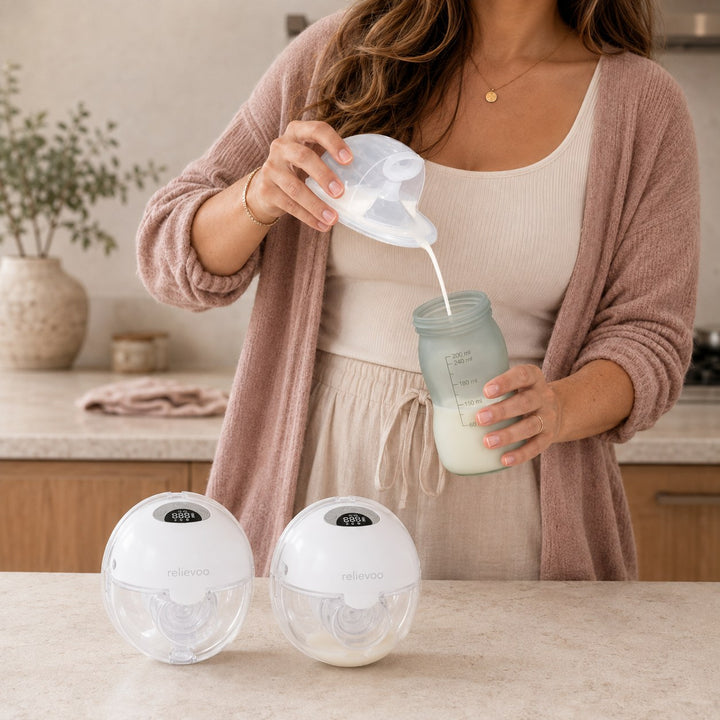
Other brands occupy similar spaces. Medela and Philips Avent make traditional electric pumps with tubing and external motors. Elvie and Willow focus on wearable technology with app connectivity. Lansinoh produces both electric and manual options. Relievoo's Wearable Breast Pump M22 PRO2 sits in the wearable category, designed for hands-free expression without tubes, apps or wall sockets.
| Feature | Details |
|---|---|
| Type | Wearable, in-bra, hands-free double electric breast pump |
| Modes | 4 — Stimulation, Suction, Massage, Automatic |
| Levels | Up to 12 adjustable levels with intelligent suction and frequency adjustment |
| Controls | On-device LED display and touch buttons, no app, no Bluetooth |
| Materials | BPA-free, food-grade PP and soft medical silicone in the milk path |
| Charging | USB-rechargeable with round charging base |
Types of breast pump: what each brand offers
Traditional electric pumps with tubing
Tommee Tippee's electric pumps follow the familiar format: a motor unit plugs into the wall or runs on battery, with thin tubes carrying suction to flanges that fit over your breasts. Bottles collect the milk beneath. You sit beside the pump, typically with a hands-free bra if you want to read or hold your phone.
This setup has been used by millions of mums and works reliably. The separate motor can be more powerful than tiny wearable units, and the controls are usually straightforward buttons on a box you can see clearly. The trade-off is portability. You need a private space, a flat surface, and time set aside.
Wearable in-bra pumps
Momcozy's range centres on wearable pumps that tuck entirely inside your bra. Each cup contains its own motor, suction mechanism and collection container. There are no tubes trailing to a separate machine, no need to be near a socket, and no obvious external equipment.
This format suits mums who express at work, travel frequently, or simply need to multitask while caring for other children. The discretion is genuine: with the right clothing, no one can tell you're pumping. The compromise is that everything must fit in a palm-sized unit, so battery life, capacity and suction customisation work within tighter constraints.
Manual pumps
Tommee Tippee also makes manual pumps, which operate by hand pressure through a handle or trigger. These are quiet, small enough for any bag, and need no power source. Most mums use them as a backup for travel or emergency situations rather than for regular expressing, since hand-operated pumping becomes tiring during long sessions.
How to compare breast pumps across brands
When you see Tommee Tippee vs Momcozy discussed online, the conversation often drifts towards features that may not matter for your situation. Instead of chasing specifications, think about these practical questions:
- Where will you mostly express? At home at predictable times, or in unpredictable locations?
- Do you need to hold a baby, work on a laptop, or move around while pumping?
- Is noise a concern? Will you pump near a sleeping baby or in shared spaces?
- How important is discretion? Do you want to pump without others noticing?
- Will you travel with the pump, or keep it in one place?
- Do you prefer simple on-device controls, or are you comfortable with apps and Bluetooth pairing?
Your answers point more reliably towards the right pump than any feature list. A wearable pump's portability means little if you only ever express at 7am in your kitchen. Equally, a traditional pump's power becomes irrelevant if you cannot find private space to use it at work.
Side-by-side comparison: what to expect from each type
The table below compares wearable in-bra pumps, traditional electric pumps with tubing, and manual pumps across the criteria that most affect daily use. The wearable column shows the Relievoo M22 PRO2 as an example of this category, using only its stated product facts.
| Criteria | Wearable in-bra (example: Relievoo M22 PRO2) | Traditional electric with tubing | Manual pump |
|---|---|---|---|
| Portability | Fits in nursing bra; no tubes or wall socket needed | Motor unit sits on surface nearby; requires tubing and usually mains power or charging | Small enough for any bag; no power needed |
| Hands-free use | Fully hands-free once positioned | Hands-free bra usually needed; still tethered to motor | One hand required throughout |
| Noise level | Ultra-quiet motor, designed for discretion near sleeping babies | Varies by model; motor hum audible in quiet rooms | Silent apart from occasional suction release |
| Modes and levels | Four modes (Stimulation, Suction, Massage, Automatic) across twelve levels | Typically two-phase expression with adjustable suction; range varies by model | User controls speed and rhythm manually |
| Controls | On-device LED display and touch buttons; no app or Bluetooth | Buttons or dials on motor unit; some models offer app connectivity | Physical handle or trigger |
| Cleaning | Separate cup, flange and valve components; milk path in silicone and PP | Flanges, bottles, tubes and valves to clean and air dry | Fewest parts; typically flange, bottle and valve |
| Best suited for | Mums expressing on the move, at work, or while multitasking | Regular home expressing with dedicated time and space | Occasional use, travel backup, or emergency expressing |
Key questions mums ask when choosing
What breast pump should I get?
Start with your typical week. If you will express daily at unpredictable times or in shared spaces, a wearable in-bra pump removes the logistical barriers that make pumping feel impossible. If your routine is stable and you have a comfortable spot at home, a traditional electric pump may serve you well for less investment. Many mums eventually own both: a primary pump for regular use and a lightweight backup for travel or busy days.
Is breast pumping painful?
Pumping should feel like strong but comfortable suction, never pinching or rubbing. Pain usually signals a flange that is too small or too large, or a suction level set higher than necessary. Begin gently and increase only if milk flow remains slow. Your midwife, health visitor or a breastfeeding supporter can check your flange fit. Organisations such as La Leche League GB offer free guidance on comfortable expressing.
How does a breast pump work?
All pumps, whether Tommee Tippee, Momcozy or another brand, operate on the same principle: rhythmic suction mimics a baby's suckling to trigger let-down and draw milk out. Electric pumps automate this cycle. Wearable pumps contain miniature motors that do the same job inside your bra. The difference is packaging and convenience, not fundamental mechanism.

Verdict: who should choose which pump
After considering Tommee Tippee vs Momcozy and the broader market, here is how the options map to different situations:
- Choose a traditional electric pump with tubing if you have a regular expressing schedule, a private space at home or work, and prefer visible controls on a separate unit. Tommee Tippee and similar brands from Medela or Philips Avent fit this approach.
- Choose a wearable in-bra pump if you need to express while working, travelling, caring for other children, or simply want discretion in shared spaces. Momcozy specialises here, and the Relievoo Wearable Breast Pump M22 PRO2 offers four modes across twelve levels with no app required.
- Choose a manual pump if you express occasionally, need an emergency backup, or want something that works anywhere without power. Tommee Tippee and Lansinoh both make reliable options.
- Consider owning two types if your life mixes predictable home sessions with unpredictable away-from-home needs. Many mums find a wearable pump transforms their ability to maintain expressing long-term.
For mums still unsure, Relievoo's full breast pump collection includes options across categories, and the customer service team can talk through your specific routine.
Practical tips for whichever pump you choose
Regardless of brand, a few habits help expressing go more smoothly. Replace valves and membranes when suction weakens, as these small parts wear with use. Keep spare flanges in your correct size, since breast size can shift during your feeding journey. Store milk following current guidance from the NHS or UNICEF UK Baby Friendly Initiative rather than relying on general rules of thumb.
If you are struggling with supply concerns, pain, or your baby refusing the bottle, speak to your midwife, health visitor or GP. Pump choice matters for convenience, but it does not determine your success with breastfeeding or expressing. Support and accurate information make the bigger difference.
Conclusion
Comparing Tommee Tippee vs Momcozy in the UK really means comparing two approaches to expressing: the familiar seated session with a traditional pump, and the freedom of a wearable that moves with you. Neither is the single right answer. The best pump is the one you will actually use, in the places and times your life demands. Take an honest look at your typical week, prioritise the features that remove friction from your routine, and choose accordingly.
Frequently asked questions
What breast pump should I get?
The right pump depends on your daily routine. If you need to express at work or while caring for a toddler, a wearable in-bra pump lets you move about. If you mainly pump at home with time to sit, a traditional electric pump with tubing may feel more familiar. Manual pumps suit occasional use or keeping in your bag as a backup.
Is breast pumping painful?
It should not be. Discomfort usually means the flange size is wrong or the suction level is too high. Start on a gentle setting and check that your nipple moves freely without rubbing the tunnel sides. If pain persists, speak to your midwife, health visitor or a breastfeeding supporter.
How long should a breast pump session last?
Most mums find that sessions settle into a rhythm that works for them and their baby. Rather than watching the clock, look for signs that your milk flow has slowed. For guidance on expressing and storing milk, see the current advice from the NHS or UNICEF UK Baby Friendly Initiative.
How does a breast pump work?
A pump uses gentle suction to draw milk from the breast. Electric pumps cycle between a quick, light rhythm to trigger let-down and a slower, deeper rhythm for expression. Wearable pumps do this inside your bra without tubes to a separate motor. Manual pumps rely on a handle you squeeze yourself.
Can you breast pump colostrum?
Yes, though colostrum is often produced in small amounts and can be thick. Some mums find hand expression easier in the very early days. Your midwife or a breastfeeding counsellor can show you techniques that work. If you have concerns about your baby's intake, contact your midwife or NHS 111.