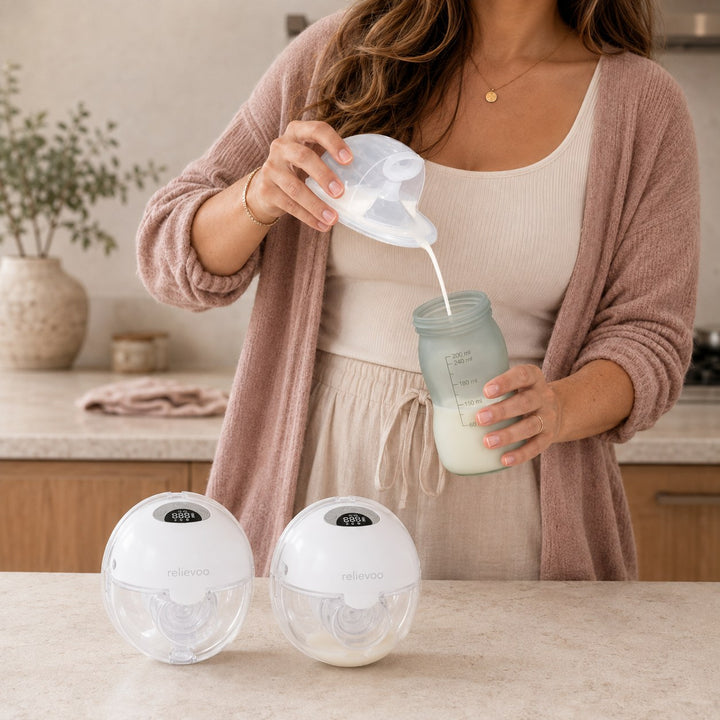
Are Hands Free Breast Pumps Worth It?
Short answer Hands free breast pumps are worth it for moms who need to move around while pumping, work at a desk, or care for a baby without being tied to a cord. They are discreet, quiet and worn inside your bra, but they cost more than traditional pumps and hold less milk. The right choice depends on your routine, your comfort and how often you plan to pump.
Hands-free breast pumps have become a popular choice for Canadian moms who want to express milk without being tied to a wall outlet. If you're wondering whether they're worth the investment, this guide is for you. We'll walk through how they work, what to look for, and who gets the most benefit from going hands-free.

What is a hands-free breast pump?
A hands-free breast pump is a wearable device that fits inside your nursing bra. Instead of tubes connecting to a separate machine, the pump and collection cup sit directly against your breast. You control it with buttons on the device, and milk collects in a cup that you empty when you're done.
Most hands-free pumps are electric and rechargeable, so you can move around your home, work at a desk, or tend to your baby while pumping. Some models, like the Relievoo M22 PRO2, offer multiple modes and adjustable suction levels to help you find a comfortable rhythm.
How does a hands-free breast pump work?
The pump uses gentle suction to draw milk from your breast into a collection cup. You place the cup inside your bra, position it over your nipple, and turn it on. Most devices let you switch between a stimulation mode to encourage let-down and a suction mode for fuller expression. Some also include a massage mode for comfort and an automatic mode that cycles between settings.
Because everything is contained in the cup, there are no cords, no tubes, and no separate motor unit to carry. The milk collects directly in the cup, and you pour it into a bottle or storage container when your session is done.
| Feature | Details |
|---|---|
| Type | Wearable, in-bra, hands-free double electric breast pump (sold as a set of two cups) |
| Modes | 4 — Stimulation, Suction, Massage, Automatic |
| Levels | Up to 12 adjustable levels with intelligent suction & frequency adjustment |
| Controls | On-device LED display + touch buttons, no app, no Bluetooth |
| Materials | BPA-free, food-grade PP and soft medical silicone in the milk path |
| Design | Clear collector cup, worn upright in-bra, USB-rechargeable with round charging base |
Are hands-free breast pumps worth it?
The short answer is: it depends on your lifestyle. Hands-free pumps are worth it for moms who pump regularly and want to multitask. They're especially helpful if you're returning to work, travelling, or caring for an older baby who needs attention while you pump.
That said, they do cost more than traditional pumps, and they typically hold less milk per session. If you only pump occasionally or prefer to sit quietly and relax while expressing, a standard electric pump might serve you just as well.
What to consider before buying a hands-free pump
Choosing the right pump is a personal decision. Here are the main factors to weigh before you make a purchase.
Comfort and fit
Comfort is the most important thing in a breast pump. A pump that doesn't fit well can be painful and may not express milk effectively. Look for a pump with soft silicone flanges and multiple suction levels so you can adjust the intensity to what feels right for you. The pump should sit securely in your bra without digging in or slipping.
Noise level
If you plan to pump at work, in a shared space, or beside your baby's cot at night, noise matters. A quiet motor lets you pump without drawing attention or waking a sleeping baby. Some pumps are noticeably quieter than others, so it's worth checking the noise level before you commit.
How it's worn
Hands-free pumps are designed to be worn inside your bra, but not all bras are the same. Some pumps are bulkier and may not fit well under tight clothing. Look for a pump that sits discreetly and stays upright to avoid spills. A clear collection cup is helpful because you can see how much milk you've expressed without removing the pump.
Cleaning and maintenance
Breast pumps need to be cleaned after every use to keep milk safe for your baby. Hands-free pumps have several parts that need washing, including the collection cup, flange, and silicone membranes. Consider how easy the pump is to take apart and clean, especially if you'll be washing it at work or on the go. You can read more in our guide on how to clean a breast pump on the go.
Battery life and portability
Since hands-free pumps are cordless, battery life is a key factor. If you pump multiple times a day away from home, you'll want a pump that lasts through your sessions and recharges easily. A USB charging base is convenient because you can top up the pump from a laptop or power bank.
Capacity
Wearable pumps generally hold less milk than traditional pump bottles. If you have a strong milk supply or need to pump a full feeding in one session, you may need to empty the cup partway through and continue. Think about your typical pumping volume and whether a smaller capacity will be a problem.
Support and warranty
A breast pump is an investment, so it's worth choosing one with solid support. Look for a brand that offers a warranty and a reasonable return policy. If you have questions about how to use the pump or how to clean it, good customer service can make a big difference.
Hands-free vs. traditional breast pumps
Traditional electric pumps have been around for a long time and are well understood. They usually offer strong suction, large collection bottles, and a proven track record. But they tether you to a wall outlet and require you to sit still while pumping, often with your hands holding the flanges in place.
Hands-free pumps trade some of that capacity and power for freedom and discretion. You can move around, type on a keyboard, or hold your baby while expressing. For many moms, that convenience is worth the trade-off. For others, the larger capacity and familiar feel of a traditional pump is more important.
There's no single right answer. Some moms use a traditional pump at home and a wearable pump for work or travel. Think about where and how often you pump, and choose the option that fits your daily life.
Checklist for choosing a hands-free breast pump
Before you buy, run through this checklist to make sure the pump will work for you.
- Does the pump fit comfortably inside your nursing bra?
- Are the suction levels adjustable so you can find a gentle setting?
- Is the motor quiet enough for work or nighttime pumping?
- Can you see how much milk you've expressed without removing the pump?
- Is the pump easy to take apart and clean after each use?
- Does the battery last through your typical pumping sessions?
- Will the collection cup hold enough milk for your needs?
- Does the brand offer a warranty and a return policy?

Comparison table: what to check in a hands-free pump
| Criterion | Why it matters | What to check |
|---|---|---|
| Comfort | A comfortable pump makes sessions easier and less stressful. | Soft silicone flanges, multiple suction levels, secure in-bra fit. |
| Noise | A quiet pump lets you express discreetly and won't wake a sleeping baby. | Low-noise motor, suitable for calls or nighttime use. |
| Fit | The pump must stay in place and sit upright to avoid leaks. | Worn upright in-bra, spill-resistant design, discreet under clothing. |
| Cleaning | Pump parts must be cleaned after every use for safety. | Few parts, easy to disassemble, dishwasher-safe or simple to wash. |
| Capacity | You need enough room to collect a full feeding. | Clear cup so you can see the volume, easy to empty and reattach. |
| Portability | A cordless pump works anywhere, not just near an outlet. | Rechargeable battery, USB charging, lightweight design. |
| Support | Good support helps if you have questions or issues. | Warranty, return policy, responsive customer service. |
Who are hands-free breast pumps best for?
Hands-free pumps are a great fit for moms who pump regularly and need flexibility. If you're returning to work, you can pump at your desk without stepping away. If you have a busy toddler, you can chase them around while expressing. If you travel, a cordless pump means you're not hunting for an outlet.
They're also helpful for moms who pump at night. A quiet pump lets you express beside your baby's cot without waking them, and you can do it while lying back or sitting comfortably.
On the other hand, if you only pump once in a while, or if you prefer a pump with a larger capacity, a traditional electric pump may suit you better. Some moms find wearable pumps less powerful, so it's worth trying one to see if it meets your needs.
If you're curious about a specific model, the Relievoo M22 PRO2 is a wearable double pump with four modes, including a massage mode for comfort, and up to twelve gentle levels. It's designed to sit discreetly in your bra with no tubes and no app. You can explore the full range of Relievoo breast pumps to compare options.
Final thoughts
Hands-free breast pumps are worth it for many moms, but not all. The decision comes down to your routine, your comfort, and how much you value the freedom to move while pumping. Take time to consider the factors in this guide, and don't hesitate to reach out to Relievoo customer service if you have questions about a specific product.
For more guidance on pumping, you can read through the resources from Health Canada and the Canadian Paediatric Society. They offer reliable information on infant feeding and breastfeeding that can help you make confident choices.
Whatever you decide, the best pump is the one that feels right for you and fits your daily life.
Frequently asked questions
How does a hands free breast pump work?
A hands free breast pump fits inside your nursing bra, with a collection cup that sits against your breast. It uses gentle suction to draw milk into the cup, and you control the mode and level with buttons on the device itself. Because there are no tubes or cords, you can move around and use both hands while you pump.
Is a hands free breast pump worth it?
It depends on your routine. If you pump often, travel, work at a desk, or need your hands for other tasks, a hands free pump can make sessions much easier and more discreet. If you only pump occasionally and don't mind sitting still, a traditional pump may be a more budget-friendly choice.
Which is better: hands free wearable or normal breast pump?
Neither is universally better. Wearable pumps offer freedom and privacy, while traditional pumps often have larger collection capacities and a more established track record. Think about where you'll pump, how long your sessions are, and whether being hands free matters to you. Many moms use both at different times.
How long can breast pump parts stay in the fridge?
Current guidance on storing pump parts between sessions changes, so it's best to follow the advice of a trusted authority like Health Canada or the Caring for Kids website from the Canadian Paediatric Society. They provide clear, up-to-date recommendations on cleaning and storing pump parts safely.
Can you pump while pregnant?
Pumping while pregnant is a personal decision that depends on your health and your pregnancy. It's generally recommended to talk with your family doctor, midwife or a lactation consultant before starting, since nipple stimulation can affect some pregnancies. They can give you guidance tailored to your situation.