Do Wearable Breast Pumps Work?
Short answer Yes, wearable breast pumps work well for many moms. They are hands-free, quiet, and fit inside your bra, making it easier to pump while moving or working. They may not suit every body or every situation, so it helps to compare them with traditional electric and manual pumps before deciding.
If you have been searching "do wearable breast pumps work", you are likely trying to figure out whether a hands-free pump can really keep up with your daily life. This article is for moms in Canada who are weighing their options before buying a breast pump. We will compare the main types of pumps, look at how they work, and help you decide which one fits your routine best.

What is a wearable breast pump?
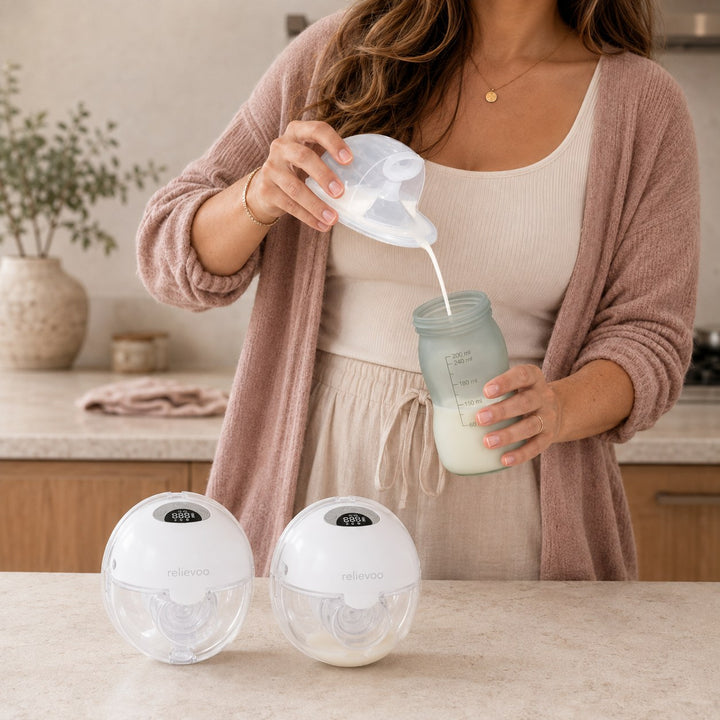
A wearable breast pump is a hands-free, in-bra electric pump that sits discreetly inside your nursing bra. Unlike traditional pumps, there are no tubes connecting you to a motor unit, and no cords tethering you to a wall. The collection cup goes against your breast, and the motor sits on top, all tucked inside your bra.
Most wearable pumps are operated with simple on-device controls, and many have a small display that shows your mode, level, and battery. Some models, like the Relievoo M22 PRO2, do not require an app or Bluetooth pairing, so everything you need is right on the device itself.
How does a wearable breast pump work?
A wearable pump works by creating gentle suction that draws milk from your breast into a collection cup. Most models offer different modes, such as a light stimulation mode to encourage let-down, and a deeper suction mode to express milk more fully. Some pumps also include a massage mode for comfort, which can be helpful if you are feeling engorged or tender.
Because the pump is worn inside your bra, you can move around, use your hands, and even lie down while pumping. That freedom is the main reason many moms wonder whether these pumps really work as well as the traditional ones.
| Feature | Details |
|---|---|
| Type | Wearable, in-bra, hands-free double electric breast pump (sold as a set of two cups) |
| Modes | 4 — Stimulation, Suction, Massage, Automatic |
| Levels | Up to 12 adjustable levels with intelligent suction & frequency adjustment |
| Controls | On-device LED display + touch buttons (mode, +, −, power), no app, no Bluetooth |
| Materials | BPA-free, food-grade PP and soft medical silicone in the milk path |
| Noise | Ultra-quiet motor, tuned for calm night sessions |
Comparing the main types of breast pumps
To answer "do wearable breast pumps work", it helps to look at how they compare with the other main options: traditional electric pumps with tubing, and manual pumps. Each type has a different design and serves a different purpose.
Wearable in-bra pumps
Wearable pumps are the most discreet option. They fit entirely inside your bra, so there are no visible bottles or tubes. This makes them ideal for pumping while working, doing chores, or caring for older children. Brands like Momcozy, Elvie, and Willow make wearable pumps, and each has its own approach to fit and function.
Traditional electric pumps with tubing
Traditional electric pumps, such as those made by Medela and Philips Avent, use a motor unit that sits on a table or counter, connected to breast shields by tubing. These pumps are often seen as the standard for frequent pumping, and they typically offer strong, adjustable suction. The trade-off is that you are tethered to the motor while you pump, which makes it harder to move around.
Manual pumps
Manual pumps, including options from Lansinoh and Tommee Tippee, are operated by hand. You squeeze a handle to create suction, which gives you full control over the rhythm and strength. Manual pumps are small, quiet, and inexpensive, but they require one hand to operate, and they can be tiring for frequent or full-time pumping.
Do wearable breast pumps work as well as traditional pumps?
This is the question most moms want answered. The honest answer is that it depends on your body, your routine, and what you need from a pump. Many moms find wearable pumps work very well for everyday expression, especially once their milk supply is established. The convenience of being hands-free often means they pump more consistently, which can make a difference in their overall experience.
Traditional electric pumps are often recommended for the early weeks or for moms who are exclusively pumping, because they tend to offer consistent, adjustable suction. However, they keep you in one place, which can be frustrating when you have a busy household. For many moms, a wearable pump is a practical choice for daily use, while a traditional pump might be kept for specific situations.
It is also worth noting that comfort plays a big role in how well any pump works. A pump that feels uncomfortable or awkward is less likely to be used regularly. The Relievoo M22 PRO2 is designed with comfort in mind, featuring four modes across twelve gentle levels, including a dedicated massage mode for relief from engorgement and tenderness.
Who is a wearable pump good for?
Wearable pumps are a great fit for moms who need to pump while doing other things. If you are returning to work, travelling, or caring for a toddler while nursing a baby, a hands-free pump can make a big difference. They are also popular for night pumping, because many models are quiet enough to use beside a sleeping baby.
That said, wearable pumps may not suit everyone. Some moms find that the fit inside their bra is tricky, especially in the early weeks. If you have concerns about fit or comfort, it is a good idea to talk to a lactation consultant or a public health nurse. You can also read more about breastfeeding and infant nutrition from the Public Health Agency of Canada.
Comparison table: wearable vs traditional electric vs manual
Here is a quick comparison of the three main types of pumps, based on what matters most to moms. The Relievoo column reflects the features of the M22 PRO2.
| Criterion | Wearable in-bra (Relievoo M22 PRO2) | Traditional electric with tubing | Manual |
|---|---|---|---|
| Hands-free | Yes, worn inside the bra | No, you are tethered to the motor | No, one hand is needed to operate |
| Discretion | Fits discreetly in your bra, no visible bottles | Visible bottles and tubing, motor on the table | Small and portable, but requires hand pumping |
| Modes and levels | 4 modes (Stimulation, Suction, Massage, Automatic) across up to 12 levels | Typically offers adjustable suction levels | Controlled entirely by your hand rhythm |
| Noise | Ultra-quiet motor, suitable for night pumping | Motor hum is usually audible | Very quiet, no motor at all |
| Mobility | Full mobility, move around freely | Limited to where the motor is placed | Portable, but you must use one hand |
| Ease of use | One-touch controls, no app or Bluetooth | Requires setup with tubing and shields | Simple, but can be tiring over time |
| Best for | Busy moms who need to pump while moving | Frequent or full-time pumping sessions | Occasional use or travel emergencies |

How to choose the right breast pump for you
Choosing a breast pump is a personal decision, and there is no single right answer. The best pump for you depends on how often you plan to pump, where you will be pumping, and what feels comfortable on your body.
Consider your daily routine
If you are returning to work or are often on the go, a wearable pump is likely to fit your life best. If you mostly pump at home and prefer a strong, consistent suction, a traditional electric pump might be a better match. If you only need to pump occasionally, a manual pump could be enough.
Think about comfort and fit
Comfort is one of the most important factors in pumping. A pump that does not fit well or feels painful will not be used consistently. If you are unsure about sizing or fit, a lactation consultant can help. The Caring for Kids website from the Canadian Paediatric Society also has helpful information on breastfeeding and pumping.
Look at the full picture
When comparing pumps, think about more than just suction strength. Consider how easy the pump is to clean, how quiet it is, and whether it fits your lifestyle. You can browse a range of options in the Relievoo breast pump collection to see what is available.
Verdict: who should choose which pump?
Here is a clear breakdown of who each type of pump suits best.
- Choose a wearable in-bra pump if... you need to pump while working, caring for other children, or moving around the house. It is also a great choice if you value discretion and want to pump without being tethered to a wall.
- Choose a traditional electric pump if... you are exclusively pumping, pumping frequently, or prefer a pump with a separate motor unit that sits on a table. It is a solid choice for dedicated pumping sessions at home.
- Choose a manual pump if... you only pump occasionally, need a backup option for travel, or want a simple, quiet pump that does not require batteries or electricity.
Final thoughts
So, do wearable breast pumps work? For most moms, yes, they work very well for daily, hands-free expression. They offer freedom and discretion that traditional pumps cannot match, and many are designed with comfort features that make pumping gentler. The key is to choose a pump that fits your body, your routine, and your comfort needs. Take your time, compare your options, and do not hesitate to reach out to a healthcare professional if you have questions about what is right for you.
For more guidance on pumping, you can explore our article on whether hands-free breast pumps are worth it, or read about returning to work while breastfeeding. And if you have questions about a specific product, Relievoo customer service is happy to help.
Frequently asked questions
How does a wearable breast pump work?
A wearable breast pump fits inside your nursing bra, with the collection cup against your breast and the motor sitting on top. It uses gentle suction to draw milk into the cup, and many models let you switch between stimulation and suction modes with a touch of a button. Because there are no tubes or cords, you can move around freely while pumping.
Do wearable breast pumps work as well as traditional electric pumps?
Many moms find wearable pumps work very well for everyday expression, but results can vary from person to person. Traditional electric pumps with tubing are often seen as the standard for frequent or full-time pumping, while wearables offer far more freedom and discretion. It is a good idea to try both and see which one feels comfortable and effective for you.
Do wearable breast pumps work for large breasts?
Wearable pumps can work for larger breasts, but the fit inside your bra is important. The cup needs to sit securely and stay in place for a good seal, so it helps to choose a pump with a design that sits comfortably in your bra. If you are unsure, talking to a lactation consultant can help you find the right fit.
Do wearable breast pumps work for small breasts?
Yes, wearable pumps can work well for smaller breasts, as long as the cup sits flat and creates a good seal. Because the pump is worn inside the bra, it stays in place without needing to be held. If you find the fit tricky, a public health nurse or lactation consultant can offer practical tips.
Why is my wearable breast pump not working?
If your wearable pump is not working, check that the cups are positioned correctly and that the silicone flange is making a good seal against your breast. Make sure the device is charged and that the collection cup is screwed on properly. If the problem continues, contact Relievoo customer service for help.