Do Wearable Breast Pumps Work for Large Breasts?
Short answer Yes, wearable breast pumps can work well for large breasts, but the fit and positioning matter more than cup size alone. The key is finding a pump with a flange that sits comfortably and a secure in-bra design that holds everything in place. Comfort, discretion and a secure fit are the main things to consider.
If you have larger breasts, you might be wondering whether a wearable breast pump can actually work for you. The honest answer is yes, but the fit, positioning and support matter more than your bra size alone. This guide is for mums who want to know what to look for, what to check and how to choose a hands-free pump that feels comfortable and works well with their body.

Do wearable breast pumps work for large breasts?
Wearable breast pumps work by sitting inside your nursing bra, with the motor, collection cup and flange all in one unit. Because there are no tubes or bottles hanging down, they rely on your bra to hold everything in place. For larger breasts, this can be a real advantage, as the bra provides natural support and keeps the pump secure against your chest.
The main thing to consider is whether the pump sits comfortably and stays in position throughout a session. Every body is different, and what works for one mum may not work for another. The good news is that many wearable pumps are designed with flexibility in mind, so you can adjust the fit to suit your shape.
How do wearable breast pumps work?
Wearable pumps use gentle suction to draw milk from the breast into a collection cup. Most have different modes, such as a stimulation mode to encourage let-down and a suction mode for a deeper, slower rhythm. Because the pump is self-contained, you can move around, read a book or even lie back while expressing.
For larger breasts, the key is making sure the pump is positioned correctly. The flange needs to sit centrally over the nipple, and the cup should feel secure inside your bra. If the pump shifts during a session, it can affect comfort and how well milk is removed.
| Feature | Details |
|---|---|
| Type | Wearable, in-bra, hands-free double electric breast pump (sold as a set of two cups) |
| Modes | 4 — Stimulation, Suction, Massage, Automatic |
| Levels | Up to 12 adjustable levels with intelligent suction and frequency adjustment |
| Controls | On-device LED display and touch buttons, no app, no Bluetooth |
| Materials | BPA-free, food-grade PP and soft medical silicone in the milk path |
| Noise | Ultra-quiet motor, tuned for calm night sessions |
What to look for in a wearable pump for larger breasts
When choosing a wearable breast pump, there are a few things that matter more for larger busts. Comfort, fit and support are the most important, but noise, cleaning and portability also play a part in how often you actually use the pump.
Comfort and fit
Comfort is the first thing to think about. A pump that digs in, slips or feels heavy will quickly become a chore. Look for a pump with a soft, flexible flange that moulds to your shape, and a cup that sits flat against your chest. The pump should feel secure without being tight, and you should be able to move without it shifting.
How it is worn
Wearable pumps are designed to be worn inside a nursing bra, which is what makes them hands-free. For larger breasts, a well-fitting bra is essential. A bra with good support will hold the pump in place and help it stay comfortable throughout a session. Some mums find that a slightly firmer bra works better, as it keeps the cup pressed gently against the breast.
Noise and discretion
One of the biggest appeals of a wearable pump is that you can express without anyone knowing. The noise level of the motor matters, especially if you plan to pump at work, on the sofa during a film or beside your baby's cot at night. An ultra-quiet motor means you can pump without the hum that might startle a sleeping baby.
Cleaning and maintenance
Any pump needs to be cleaned after each use, and wearable pumps are no different. Look for a pump with few parts and a simple design, as this makes cleaning quicker and easier. A clear collection cup is also handy, as it lets you see your milk flow without having to take the pump apart.
Portability and support
Wearable pumps are ideal for mums who are always on the go. Because there are no tubes or wires, you can pack the pump into a changing bag and express wherever you are. If you are travelling, a protective carrying case can keep the pump safe and organised, so it is ready when you need it.
How to choose the right pump for you
Choosing a breast pump is a personal decision, and there is no single option that suits everyone. The best approach is to think about your own routine, your comfort and what you need from a pump. It can also help to read about how different pumps compare, so you can weigh up the options calmly.
If you are comparing brands, our guide on Relievoo vs Momcozy UK and the comparison of Momcozy vs Medela UK may be a useful starting point. These articles look at the type of product each brand makes and what to consider when choosing.
What to check before you buy
Before you commit to a pump, it is worth running through a quick checklist. This will help you spot any issues before they become a problem, and it will give you confidence that the pump is right for your body.
- Does the flange feel soft and comfortable against your breast?
- Will the pump stay in place inside your bra without you holding it?
- Are the controls easy to reach and simple to use?
- Is the motor quiet enough for your everyday routine?
- Are the parts easy to clean and quick to dry?
- Does the pump come with a warranty and a returns policy?
Comparing wearable pumps: what matters most
To help you compare your options, the table below sets out the main things to consider when choosing a wearable breast pump for larger breasts. Use it as a guide when you are looking at different products.
| Criterion | Why it matters | What to check |
|---|---|---|
| Comfort | A comfortable pump is one you will actually use. | Soft, flexible flange and a cup that sits flat against your chest. |
| Fit and support | The pump needs to stay in place without you holding it. | Secure in-bra design and a bra that offers good support. |
| Noise | A quiet pump lets you express discreetly, even at night. | Low-noise motor that will not startle a sleeping baby. |
| Modes and levels | Different settings help you find what feels comfortable. | Multiple modes and adjustable suction levels. |
| Cleaning | Simple parts make cleaning quicker and easier. | Few parts and a clear collection cup. |
| Portability | Hands-free pumping means you can move around freely. | No tubes or wires, and a compact design. |
Introducing the Relievoo Serenity™ wearable pump
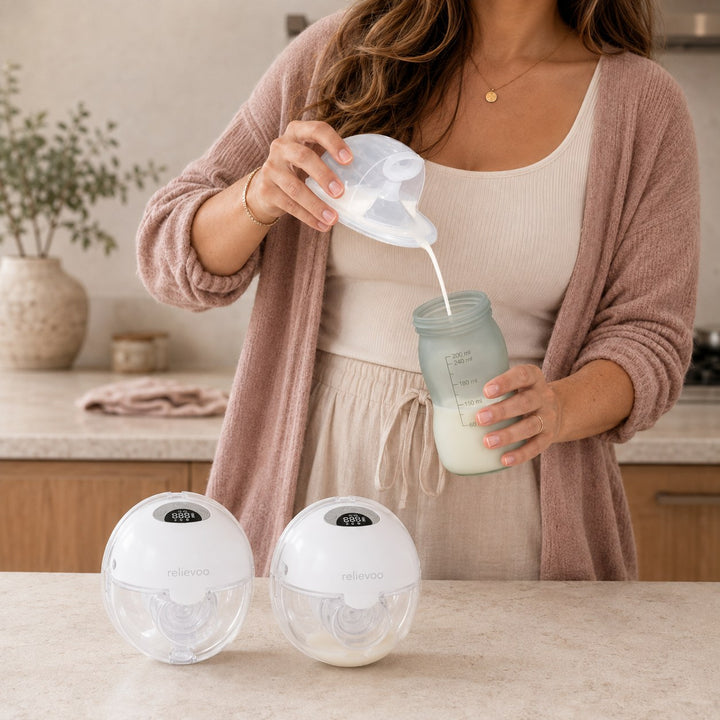
One option to consider is the Relievoo Serenity™ wearable breast pump. It is a hands-free, in-bra double pump built around comfort, with a soothing massage mode, four thoughtful modes across twelve soft levels and an ultra-quiet motor. The palm-sized cups sit discreetly inside your nursing bra, with no tubes, no wires and no app to download.
For larger breasts, the key features are the soft, flexible fit and the secure in-bra design. The clear collection cup lets you see your milk as it flows, and the one-touch LED display shows your mode, level and battery on each cup. Everything lives on the device itself, so there is no phone to pair and no extra equipment to carry.
Why comfort matters for larger breasts
Comfort is not just about how the pump feels when you put it on. It is about whether you can wear it for a full session without discomfort, and whether you feel confident using it as part of your daily routine. A pump with a dedicated massage mode can help with engorgement and the tender, tight feeling that many mums experience, which is a thoughtful addition for anyone who is new to pumping.
If you are unsure about which pump to choose, it can help to look at the full range of breast pumps available from Relievoo and compare the features that matter most to you. There is no rush, and it is fine to take your time to find the right fit.

Getting support and guidance
If you are new to pumping, or if you have questions about expressing, there is plenty of support available. The NHS has helpful information on breastfeeding and bottle feeding, including how to express milk and how to store it safely. Organisations such as the NCT and La Leche League GB also offer practical advice and support for mums.
If you have any concerns about pumping, or if something does not feel right, it is always a good idea to talk to your midwife, health visitor or GP. They can offer personalised guidance based on your own circumstances.
Who a wearable pump suits best
A wearable breast pump is a good fit for mums who want to express hands-free, whether at home, at work or on the move. It suits those who value discretion and the freedom to move around while pumping. For larger breasts, it works well when the pump fits securely and the bra provides good support.
It may be less suitable if you prefer a traditional pump with a separate collection bottle, or if you want a pump that connects to an app. It is also worth remembering that every body is different, and what works for one mum may not work for another. The most important thing is to choose a pump that feels comfortable and fits your lifestyle.
A calm final thought
Wearable breast pumps can absolutely work for large breasts, but the fit and positioning are what make the difference. Take your time to find a pump that feels secure, comfortable and easy to use, and do not be afraid to ask for support if you need it. Pumping should feel like a helpful part of your day, not a chore, and the right pump can make that possible.
Frequently asked questions
How do wearable breast pumps work?
Wearable breast pumps sit inside your nursing bra, with the collection cup and motor all in one unit. They use gentle suction to draw milk from the breast into a collector, and because there are no tubes or wires, you can move around while you pump. Most have different modes to stimulate let-down and then switch to a deeper suction rhythm.
What is the best breast pump for larger breasts?
The best pump for larger breasts is one that fits securely and stays in place without you having to hold it. Look for a pump with a comfortable flange that sits well against your breast, and a design that feels stable inside your bra. It is also worth checking that the controls are easy to reach and that the pump is quiet enough for your everyday routine.
Can using a breast pump make your breasts bigger?
No, using a breast pump does not permanently change the size of your breasts. Breasts may feel fuller or larger for a short time after pumping because of milk production, but this is temporary. The size and shape of your breasts are mostly determined by your own body, not by pumping.
Should breast pumping hurt?
Pumping should not hurt. If you feel pain, it is often a sign that the flange does not fit well or that the suction is set too high. Starting on a gentle level and adjusting slowly can help. If discomfort continues, it is a good idea to speak to your midwife, health visitor or a breastfeeding specialist for guidance.
How long should a breast pump session last?
Most mums find that a pumping session lasts around 15 to 20 minutes per breast, but this can vary from person to person. The right length of time depends on your own comfort and how your milk flows. For current guidance on pumping and expressing, the NHS has helpful information on breastfeeding and bottle feeding.